

A Day in Aruba: Rock Formations, Black Stone Beach, and the One Happy Island
Aruba calls itself "One Happy Island," and after a day exploring its desert landscape, volcanic beaches, and old gold mines, we get it. We jumped in a Jeep and went looking for the island's most unique spots, the giant rock formations, a beach made of black stones, a lagoon with a gold-mining past, and a snorkel stop, before wrapping up on the colorful port strip. Here is our full day on Aruba.
Is Aruba worth visiting for a day?
Yes. Beyond the famous white-sand beaches, Aruba's interior is a rugged desert full of surprises: sacred rock formations, volcanic black-stone beaches, hidden lagoons, and great snorkeling. A half-day Jeep tour lets you see a side of the island most beachgoers miss, and the port strip is perfect for shopping and a meal to finish.
Ayo and Casibari Rock Formations
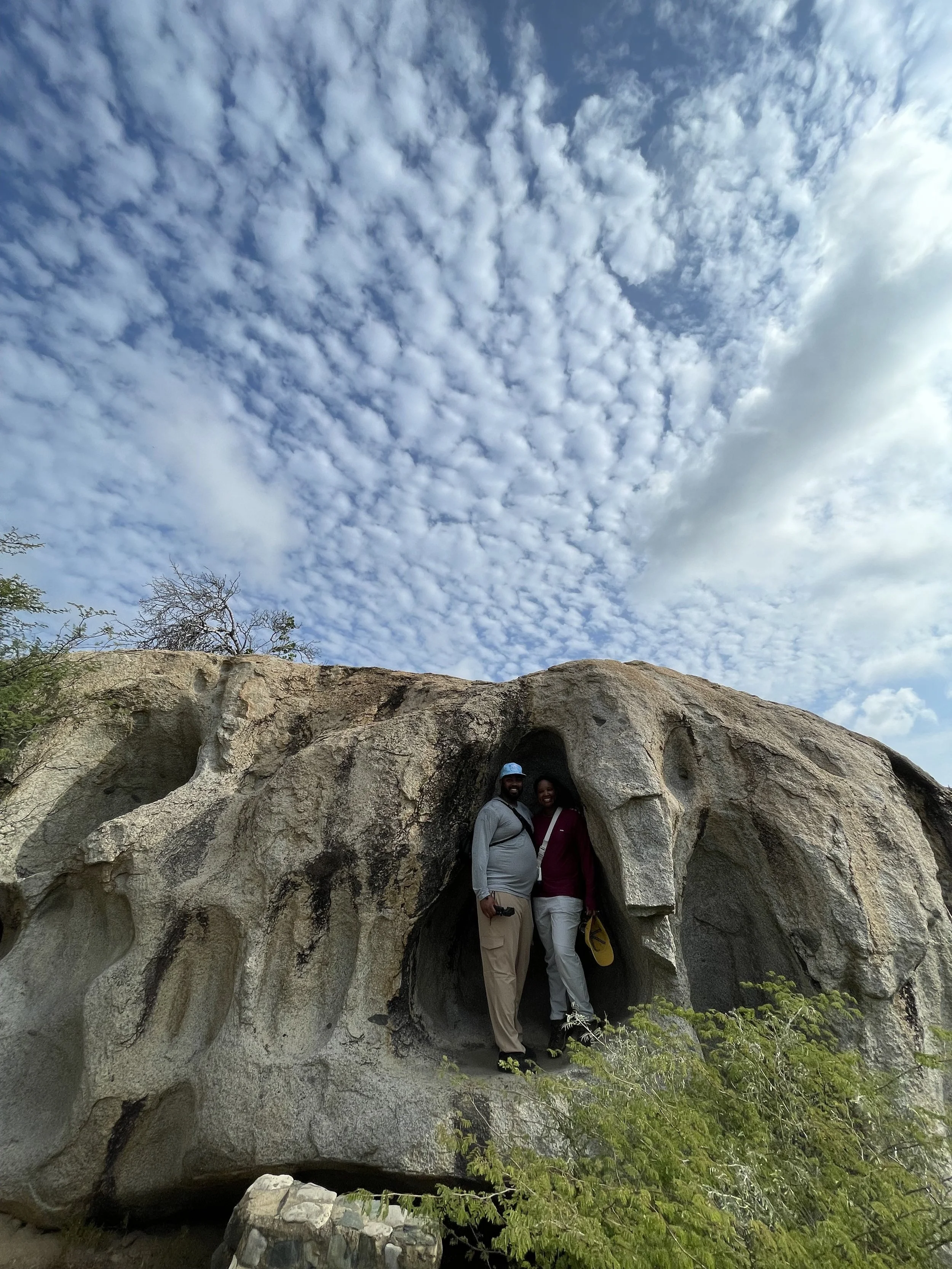
We started at the Ayo and Casibari rock formations, giant monolithic boulders that rise out of the otherwise flat desert. They are more than a photo op: the island's original inhabitants, the Arawak, considered them sacred, used them to listen for incoming storms, and carved petroglyphs into the stone during religious rites. We climbed and explored them (you can scramble up Casibari for sweeping island views), and both sites are free and open to the public.
Black Stone Beach and the natural bridge
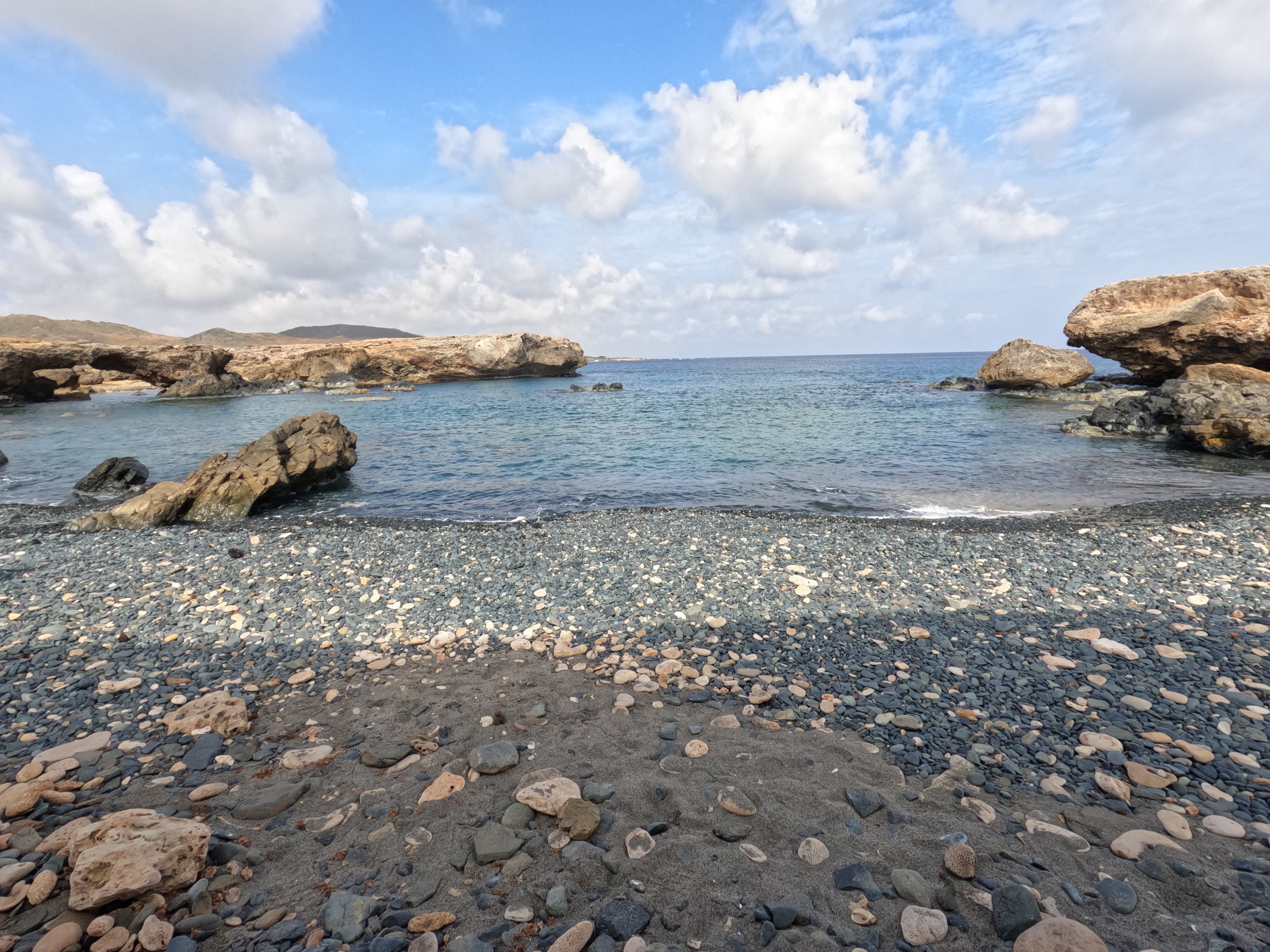
A bumpy 20-minute ride took us to the rugged north coast and Black Stone Beach, near the area of the old natural bridge. Instead of Aruba's typical white sand, this hidden beach is covered in smooth, rounded black stones formed by old volcanic activity, creating a striking contrast against the turquoise Caribbean. It is remote and usually quiet, which makes it a dream for photos, especially at sunrise. The waves roll right out in front of you. A genuinely cool, lesser-known corner of the island.
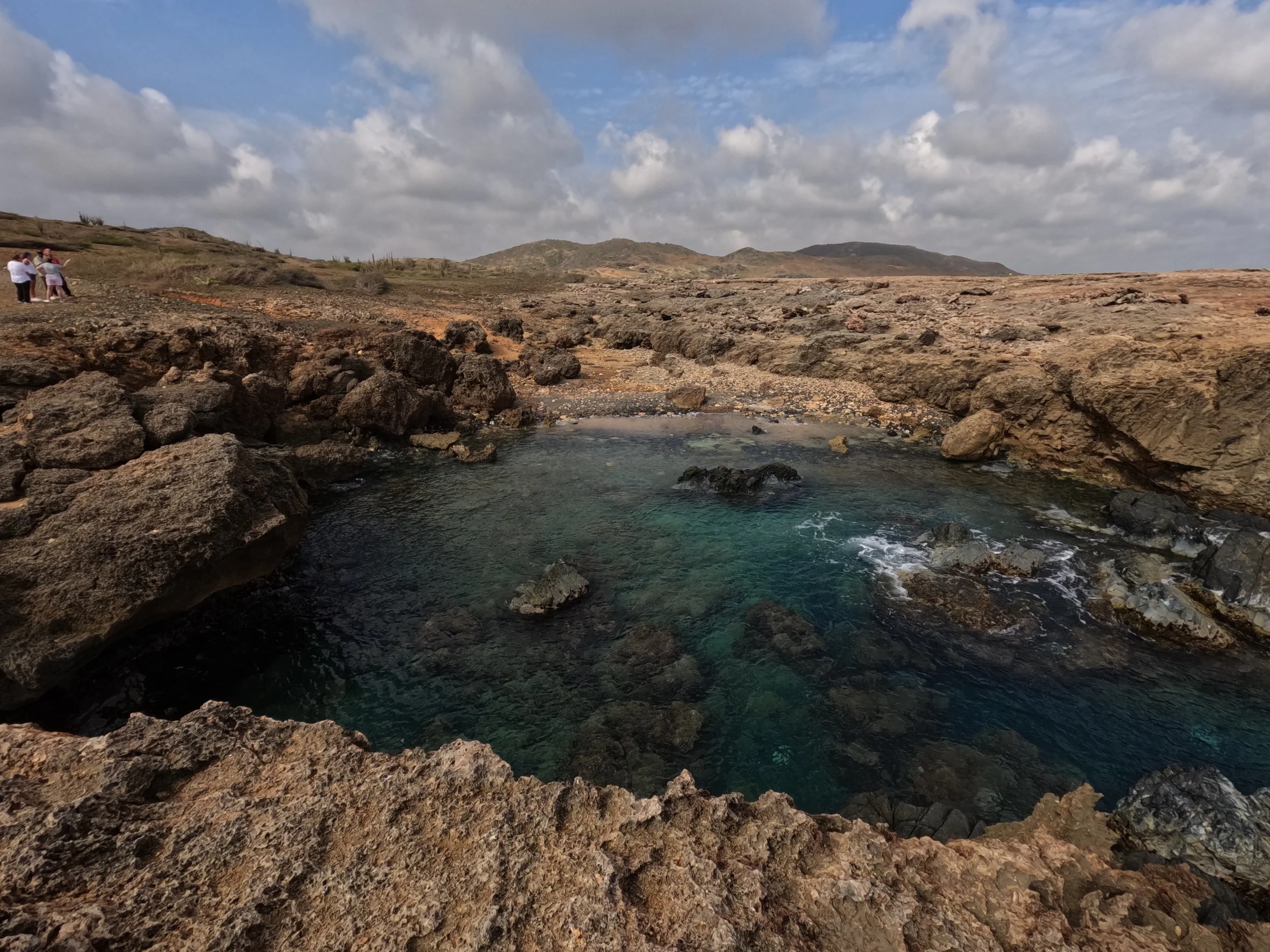
Spanish Lagoon and Aruba's gold-mining past
Next was Spanish Lagoon, a peaceful, mangrove-lined lagoon that doubles as a slice of island history. This area was once a hub for gold mining, and we actually stood on top of the old mines. Fun fact we learned: when the Dutch discovered gold here, they mined it heavily, and while there is still gold on Aruba, nobody is allowed to dig for it anymore. Today the lagoon is a calm spot for birdwatching, walking, kayaking, and paddleboarding.
Snorkeling at Mangel Halto
Our last nature stop was Mangel Halto in Pos Chiquito, a local favorite tucked among the mangroves. The calm, shallow waters here sit right over a vibrant reef just off the coast, making it ideal for snorkeling and shore diving. We waded into the crystal-blue water (a touch cooler than expected, but perfect on a hot day) and it was the ideal peaceful way to cap off the adventure portion of the day.
A few things we learned about Aruba
The island is full of fun facts:
Kids here grow up multilingual. Aruban students learn four languages, typically Dutch first, then English, Spanish, and Papiamento, the island's own Portuguese-based creole and an official language alongside Dutch.
The tap water is some of the purest anywhere. Aruba has no natural freshwater, so it produces its drinking water through advanced seawater desalination. Our guide put it best: it comes out so clean you can shower in it and drink it straight from the tap.
Eagle Beach is world-famous. It is on the other side of the island from where we were, but it has been named one of the world's best beaches by Travelers' Choice. If you have time, go see it.
The port strip (Oranjestad)
We changed out of our Jeep clothes and headed to the port strip, lined with colorful Dutch colonial buildings that nod to Aruba's multicultural heritage. The facades house everything from luxury boutiques to local craft stores, plus a wide range of restaurants and cafes serving fresh seafood, Caribbean specialties, and international fare. There are street performers, local markets, and stunning waterfront views. It is the perfect spot to shop for a souvenir, grab a meal, and soak up that easy island energy before heading back.
Honest tips for Aruba
Pick your day and dress for the sun. We caught a brutally humid day (only 83 degrees but it felt like 100). Light, breathable, sun-covering clothing and lots of water are the move.
Do a Jeep or 4x4 tour for the interior. The rock formations, black-stone beach, and lagoon are off the beaten path and worth a guide who knows the way.
Drink the tap water. It is desalinated and excellent, so skip the plastic bottles.
Save time for Eagle Beach if you want the classic white-sand, fofoti-tree Aruba postcard.
FAQ
What is Aruba known for?
Gorgeous beaches (Eagle Beach is world-ranked), a desert interior with rock formations and natural bridges, crystal-clear water, and its "One Happy Island" vibe.
Can you drink the tap water in Aruba?
Yes. Aruba's tap water is produced by high-quality seawater desalination and is safe and great-tasting.
What's the best way to see the island?
A Jeep or 4x4 tour gets you to the rugged interior sights like Ayo, Casibari, Black Stone Beach, and Spanish Lagoon that you would otherwise miss.
What language do they speak in Aruba?
Dutch and Papiamento are official, and most locals also speak English and Spanish.
The Verdict
Aruba lived up to its happy-island reputation. In one day we climbed sacred rock formations, walked a black-stone beach, stood on top of old gold mines, snorkeled a quiet reef, and shopped a colorful colonial port. The only thing we would change is the day we picked, because it was hot. Come see why Aruba is called One Happy Island, just bring water and sunscreen, and you will leave grinning like we did.
Want to ride along? Watch our full Aruba day on YouTube: We Spent a Day in Aruba and Found These Gems, and subscribe to Finding Our Forte for the rest of the cruise.
