

Our First Time Tent Camping: What We Learned (and Overpacked)
We are an RV family, so sleeping on the ground in a tent, in winter, with two kids, was a genuine bucket-list challenge for us. We figured out how to set up a tent (in the rain), survived a cold night by a lake, and learned a whole lot about what a first-timer actually needs. If you are thinking about your first tent camping trip, learn from our wins and our (many) rookie mistakes.
Is tent camping hard for beginners?
It is easier than you fear, but there is a learning curve. Setting up a tent for the first time, packing the right gear, and staying warm overnight all take a little practice. The good news: with a solid tent, a properly rated sleeping bag, and a willingness to laugh at yourself, a first tent camping trip is totally doable, even in the cold.
Lesson 1: the weather will humble you
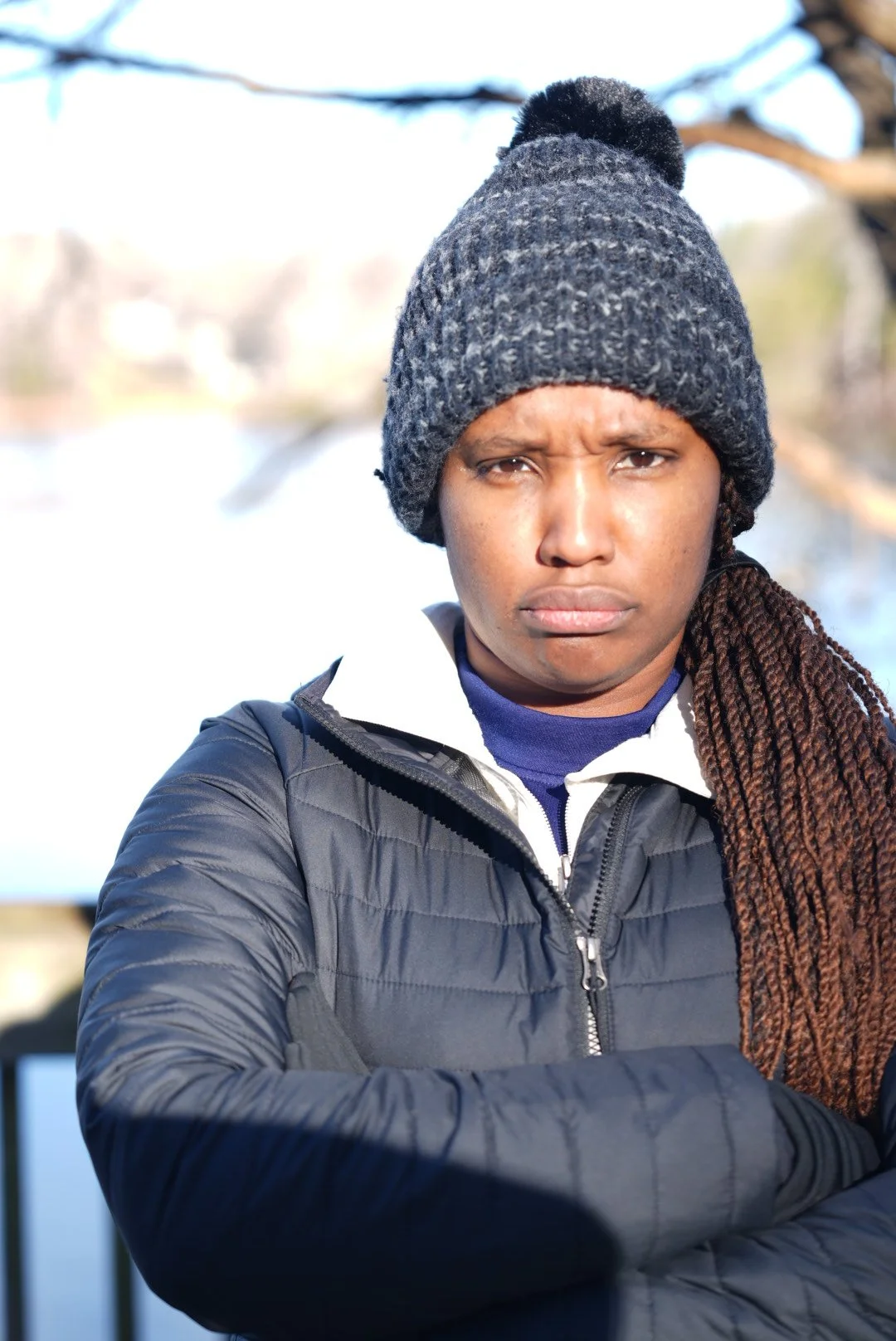
We planned a nice dry trip. Then it started raining, with rain forecast for days, and a tornado warning rolled through (a warning, not a watch, so we waited it out at family's house first). We ended up making an emergency run to REI for gear we did not realize we needed. Lesson learned: check the forecast obsessively and pack rain protection from the start.
Lesson 2: it's easy to overpack (we did)
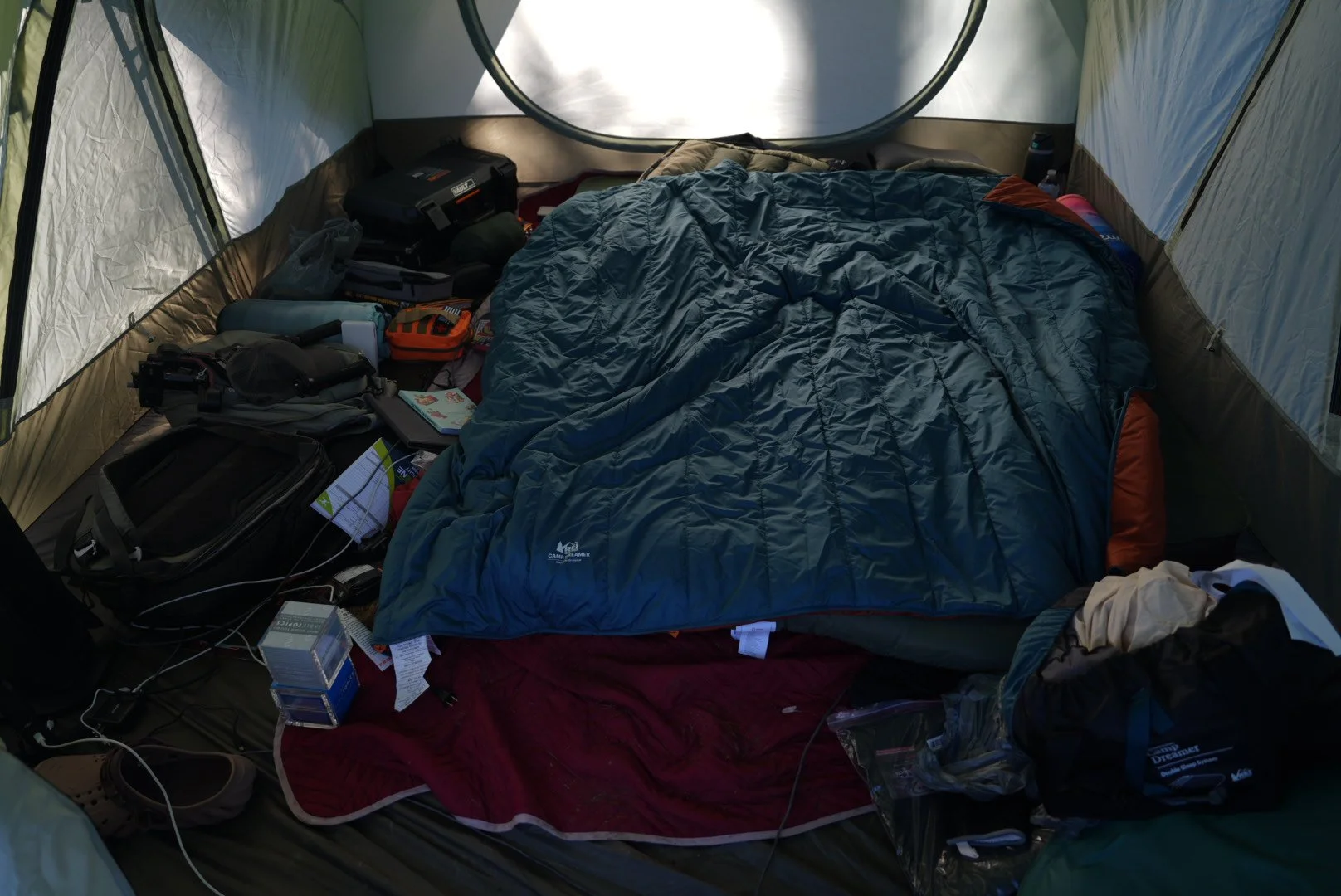
First-timers do not know what they need, so we brought everything, and then bought more when the storm hit. Standing in our tent surrounded by gear "for one night," we had to laugh. You genuinely need less than you think. Pack the essentials, a good tent, sleeping pads, a warm bag, layers, food, water, and light, and resist the urge to bring the whole house.
Lesson 3: practice setting up your tent before you go
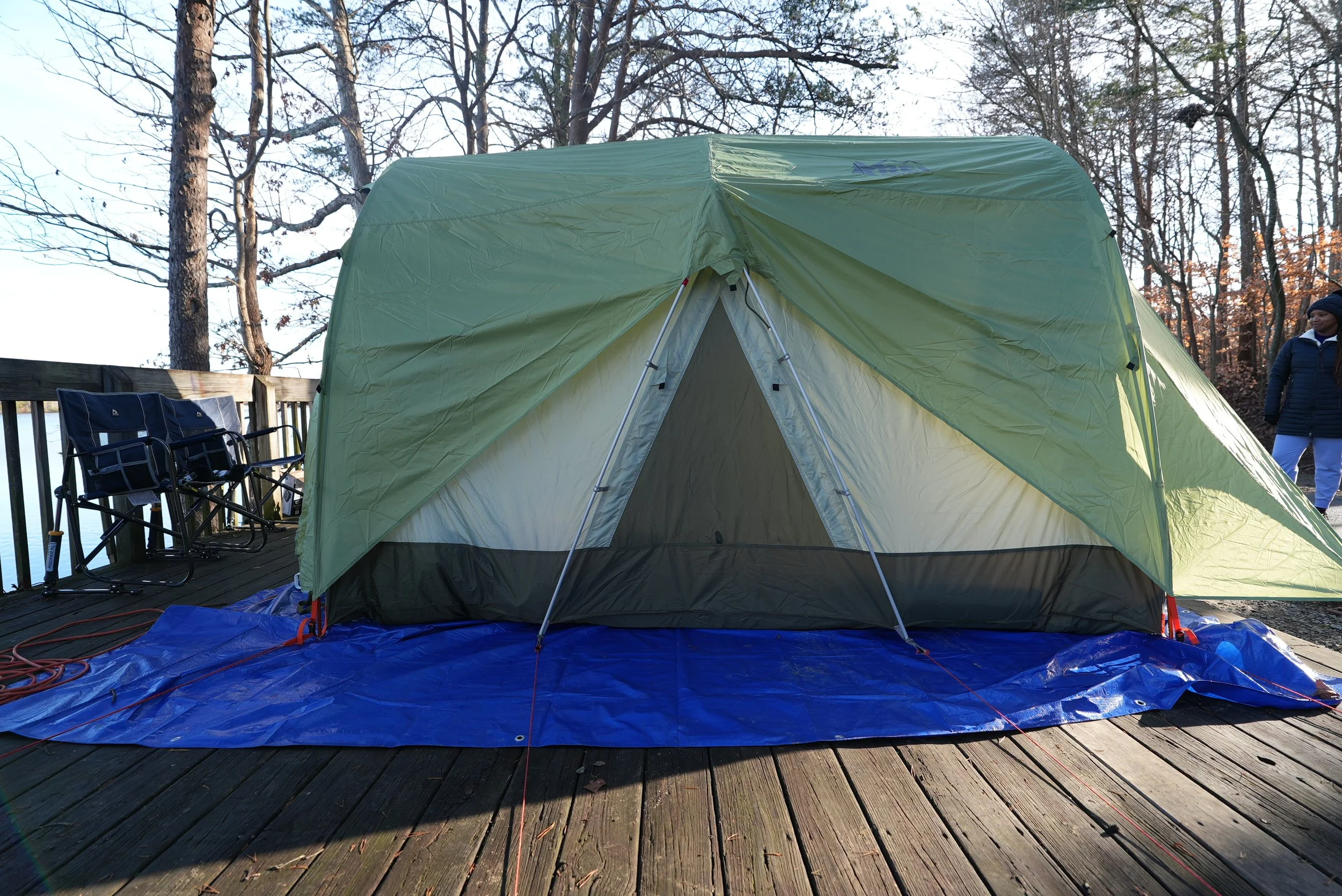
We bought the REI Co-op Wonderland 6 tent and popped it open for the very first time at the campsite, with the sun going down. Rookie move. We fumbled through the instructions (ridge poles, hoop poles, pole sleeves, clips), and at one point a pole connector popped right off. We improvised with PVC insulating tape and some rope we had stashed in the car, and honestly, it held. But do yourself a favor: set up your new tent in the backyard once before the trip.
Our campsite
Our spot was a tent platform steps from a beautiful lake, with views across the whole water. The platform and the lakeside setting made the whole thing feel special, even with wet ground from the storms. There is something about that first night out, a little nervous, a little excited, listening for every unidentified sound, that you do not forget.
Lesson 4: the right sleeping gear is everything
Here is what kept us warm when it dropped to around 42 degrees (and felt like the 30s):
A tent rated for the group. The Wonderland 6 sleeps six "cozy." For our family of four, it was roomy and just right. (Six people for a week? No. Four for a night? Perfect.)
Inflatable sleeping pads. One each, sized to fit us. They get you off the cold ground, which matters more than you would think.
A zero-degree double sleeping bag. Aaron chose a double bag so we could share body heat, and it was the MVP of the trip. No one stole the covers because we were zipped in together.
An extra camp blanket. Layered on top, it sealed the deal. We were warm all night.
Camp lights and corner pockets. Little touches that make the tent cozy and keep your gear off the floor.
The honest takeaway: do not cheap out on the sleeping bag. A good, properly rated bag is the difference between a miserable night and a toasty one.
A note on the heater
We brought a small heater and an Anker power station, and plugged into the site's 30-amp pedestal. It tripped the breaker, so we had to reset it and rethink our power load. If you plan to run a heater, know your power limits and do not overload the circuit. (We stayed warm with the sleeping gear alone, which is the more reliable plan anyway.)
Breakfast in the cold
Morning camp cooking is its own adventure. We made dehydrated meal pouches (blueberry-peach crisp, chicken pesto), just add hot water. Pro tip from our mistakes: bring a measuring cup, because eyeballing the water gives you soup. Cooking on the platform deck (the picnic table was too slanted for the stove) with hot chai and hot chocolate made the cold morning genuinely cozy.
Tips for your first tent camping trip
Practice the tent setup at home first. Do not learn at dusk in the rain like we did.
Invest in a good, properly rated sleeping bag. This is the one thing not to skimp on.
Get off the ground. Sleeping pads are essential for warmth and comfort.
Check the forecast and pack for it. Rain gear and warm layers, always.
Bring less than you think. You will overpack your first time. It is fine. Just know it.
Pack a measuring cup and simple meals. Dehydrated pouches are easy if you get the water right.
FAQ
What do you need for your first tent camping trip?
A quality tent, sleeping pads, a properly rated sleeping bag, warm layers, a light source, water, and simple food. Practice your tent setup beforehand.
Can you tent camp in cold weather?
Yes. We did it around 42 degrees and stayed warm with a zero-degree double sleeping bag, sleeping pads, and an extra blanket. The right gear is key.
What's the most common beginner mistake?
Overpacking and not practicing the tent setup. We did both. Pack light and pitch your tent at home first.
Is the REI Co-op Wonderland 6 good for a family?
For our family of four, it was great, roomy for sleeping and gear. Six people would be very cozy.
The Verdict
Our first tent camping trip had it all: rain, a tornado warning, a popped tent pole, and a cold night by the lake, and we loved it. We overpacked, we improvised, and we figured it out, which is basically the whole point of trying something new. If you have been thinking about your first night in a tent, go for it. Get a good sleeping bag, practice your setup, pack lighter than us, and embrace the adventure. You will sleep better than you expect and laugh about the rest.
Want to watch us figure it all out? See the full trip on YouTube: We Tried Tent Camping for the First Time, and subscribe to Finding Our Forte for more.
